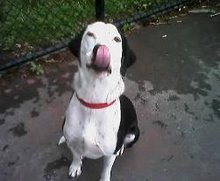
Sydney is an 12 year old, intact Blue Heeler. He has enjoyed perfect health his entire life save the fact that he kept breaking his front dew claws. It happened so frequently, I finally made the decision to have them removed, Think twice if you decide to do that to an active dog, because they will tear the stitches every day. But I digress.About 2 years ago, when I moved from a single family home into an apartment complex, he was getting really sick, every couple of months. It initially started as nausea and diarrhea, that he could not control. People in communal living, really don't think about the half sandwich they drop. So I thought he has a GI issue like his Mom. I work retail and I get home late. I do try to keep a close eye, but sometimes it is too dark to see what he ingests.
Since I have moved back to South Carolina, all three of my dogs urine went from a normal PH, to an elevated basic PH. They thought it was the food, that I was feeding my dogs fish. So after Macy passed, I put them back on a high protein lamb diet. No difference. High protein Bison, no difference. High protein duck, no difference. I asked my vet what I was doing wrong and they said maybe it is environmental! Maybe is not a word in my vocabulary!
It turned out that every time Sydney got sick, he had a UTI, Urinary Tract Infection, Bailey and Macy too. It took me a while to put two and two together to get four. It took me this long, because one day, I had to work 11 to 9:30. Sydney vomited his entire breakfast, just as I was leaving. So I stayed, cleaned up, gave him a nausea pill and prayed that would do the trick.
I cannot describe what I came home to. He had not pooped in the house or vomited. But he did not greet me at the door. I called and found him standing stoically. He would not sit, he tried. He was shaking and had a fever. I immediately took him to the emergency vet, just hating myself for leaving him when better voices said I should have called out of work. Massive UTI that took 8 weeks of antibiotics. They also gave him fluids. So much that he looked like a camel and had to pee while I slept.
Once he recovered, my vet suggested a UTI formula. He gave me samples of Hills UTI formula.
I balked because it was corn and salt with some meds. Would love to say I was gracious but bullshit came to mind.
So if you know me at all, I did research. I tried water fountains, Syd wanted nothing to do with that.The idea that if they are not hydrated enough, their urine becomes more acidic.
I have major GI issues. Let's just say from the second it enters my mouth, It's going south! Raw Cider Vinegar has changed my life, so just out of curiosity I wondered.
I put Sydney on raw cider vinegar a year ago. I use a capful, every meal, mix it with some salt free broth.. He has blossomed, I have not had one infection. The thought process is that it acidifies the urine, so the bacteria cannot grow. His PH is normal and He acts like a six year old!
Sunday, August 20, 2017
Monday, September 05, 2016
Natural cure for canine Urinary Tract Infections
For pet owners plagued by the issue, it's serious. Your dog gets recurring urinary tract infections, which includes hospitalization and weeks of antibiotics. If you're like me, the fact that your pet is on antibiotics for five or six weeks at a time causes concern. So you ask your vet, what do I do and they recommend a vet diet. Again, if you're like me you read the label and say hell no or yes but hate what you are doing.
This article will explain Urinary Tract infections, the causes and what you can do.
So for what is a bladder infection, I go to my favorite vet library, Mar Vista. A Vet in California that has built an extensive library of helpful medical information for pet owners.
The urinary tract infection is one of the most common ailments in small animal practice yet many pet owners are confused about the medical approach. Some common questions we hear are:
Are bladder infections contagious?
Why do I have to use the entire course of antibiotics if my pet is obviously better after a couple of doses?
What is the difference between doing a urinalysis and urine culture? Why should both be done?
What is the difference between UTI and Feline Lower Urinary Tract Disease?
The urinary tract consists of the kidneys, ureters (tubes which carry urine to the bladder for storage), the urinary bladder, and the urethra which conducts urine outside the body. A urinary tract infection could involve any of these areas though most commonly when we speak of a urinary tract infection (or “UTI”) we mean “bladder infection.” Because bladder infections are localized to the bladder, there are rarely signs of infection in other body systems: no fever, no appetite loss, no change in the blood tests. If the infection ascends all the way to the kidneys, then we do tend to find other signs and other lab work changes. While a kidney infection is technically also a "urinary tract infection," we usually use the term "pyelonephritis" to describe a kidney infection (see the section on "Not So Simple Infectioins" below).
It is also important to note that the term "UTI" is frequently erroneously used to refer to Feline Idiopathic Cystitis which is a very common inflammatory condition of the feline bladder affecting young adult cats. It is not a bladder infection.
BLADDER INFECTION
The kidneys make urine every moment of the day. The urine is moved down the ureters and into the bladder. The urinary bladder is a muscular little bag which stores the urine until we are ready to get rid of it. The bladder must be able to expand for filling and contract down for emptying and respond to voluntary control.
The bladder is a sterile area of the body which means that bacteria do not normally reside there. When bacteria (or any other organisms for that matter) gain entry and establish growth in the bladder, infection has occurred and symptoms can result. People with bladder infections typically report a burning sensation during urination. With pets we see some of the following signs:
Excessive water consumption.
Urinating only small amounts at a time.
Urinating frequently and in multiple spots.
Inability to hold urine the normal amount of time/apparent incontinence.
Bloody urine (though an infection must either involve a special organism, a bladder stone, a bladder tumor, or be particularly severe to make urine red to the naked eye).
Sometimes there are no symptoms at all so it is important to periodically screen patients at risk (such as elderly patients and patients that use cortisone-type medications long term).
The external genital area where urine is expelled is teeming with bacteria. Bladder infection results when bacteria from the lower tract climb into the bladder, defeating the natural defense mechanisms of the system (forward urine flow, the bladder lining, inhospitable urine chemicals etc.). Bladder infection is not contagious
Bladder infection is somewhat unusual in cats under age 10 years.
Bladder infection is somewhat unusual in neutered male dogs.
TESTING FOR BLADDER INFECTION
There are many tests that can be performed on a urine sample and many people get confused about what information different tests provide.
URINE CULTURE (AND SENSITIVITY)
This is the only test that can confirm the presence of a urinary tract infection. In this test, the urine is spun rapidly in a machine called a “centrifuge” to separate out the solids from the liquid. The solid part, called the “sediment,” is transferred to a special container and incubated for bacterial growth.
If bacteria grow, then infection is confirmed; further, a positive culture done by a reference laboratory is usually followed by additional important information: an estimate of the concentration of bacteria, the identification of the bacteria, and the antibiotic sensitivity profile. Knowing the concentration of bacteria in the sample helps determine if the bacteria cultured might represent contaminants from the lower urinary tract or bacteria that are present transiently and not truly colonizing the bladder. Similarly, knowing the species of bacteria also helps determine if the bacteria grown are known to cause disease or likely to be "innocent bystanders." The antibiotic profile tells us what antibiotics will work against the infection. There is, after all, no point in prescribing the wrong antibiotic. Clearly, the culture is a very valuable test when infection is suspected.
Urine culture results require at least a couple of days as bacteria require at least this long to grow.
URINALYSIS
The urinalysis is an important part of any database of laboratory tests. It is an important screening tool regardless of whether or not an infection is suspected. The urinalysis examines chemical properties of the urine sample such as the pH, specific gravity (a measure of concentration), and amount of protein or other biochemicals present. It also includes a visual inspection of the urine sediment to look for crystals, cells, or bacteria. This test often precedes the culture or lets the doctor know that a culture is in order. Indications that a culture of a urine sample should be done based on urinalysis findings include:
Excessive white blood cells present (white blood cells fight infection and should not be in a normal urine sample except as an occasional finding).
Bacteria seen when the sediment is checked under the microscope.
Excessive protein in the urine (protein is generally conserved by the urinary tract. Urine protein indicates either inflammation in the bladder or protein-wasting by the kidneys. Infection must be ruled out before pursuing renal protein loss.)
Dilute urine. When the patient drinks water excessively, urine becomes dilute and it becomes impossible to detect bacteria or white blood cells so a culture must be performed to determine if organisms are present. Further, excessive water consumption is a common symptom of bladder infection and should be pursued.
If the patient has symptoms suggestive of an infection, a urinalysis need not precede the culture (both tests can be started at the same time).
SAMPLE COLLECTION
There are four ways to collect a urine sample: “table top,” free catch, catheter, and cystocentesis. A table top sample, is collected from the exam table or other surface where the patient has deposited urine. This sample is likely contaminated with bacteria from the environment and/or bacteria from the lower urinary tract. This is the least desirable urine collection method but sometimes is one’s only option. If bacteria are grown, their numbers and species provide a strong clue as to whether or not they represent infection or contamination.
A free catch sample is obtained by catching urine mid-air as it is passed. The sample may be contaminated by the bacteria of the lower urinary tract but will not be contaminated by the floor or other environmental surface.
With the catheter method a small tube is passed into the bladder and the sample is withdrawn. This is not the most comfortable method for the patient though the procedure is fairly quick. Potentially, bacteria can be introduced into the bladder accidentally with the catheter so this represents a drawback though fortunately, this is a rare occurrence (assuming the catheter is only for urine sample collection and not placed for longer term urine collection). The sample obtained is unlikely to be contaminated and should represent urine as it exists in the bladder.
The ideal collection method is cystocentesis: a needle tap directly into the bladder. In this way, an uncontaminated sample is collected directly from the bladder. Sometimes a little blood is enters the sample during the needle stick but for culture purposes, the sample can be considered pristine.
TREATMENT FOR SIMPLE INFECTION
A simple bladder infection is usually easily treated with 10-14 days of antibiotics. The patient’s symptoms usually resolve quickly, within the first 2 days of treatment, though the entire course of treatment should be given. Inadequate treatment leads to infection recurrence and possibly future bacterial resistance.
Ideally, approximately 5 days after the last antibiotic dose, a new sample is cultured to be sure the infection is gone. If the infection has not cleared or if a new infection has developed, there is usually a reason why.
NOT SO SIMPLE INFECTIONS
There are several special situations concerning urinary tract infections:
KIDNEY INFECTION (PYELONEPHRITIS)
If the patient’s immune system is not ideal, the infection in the bladder may ascend into the kidneys where it can cause kidney failure and a more serious infection. There is currently no good test to determine whether or not a kidney is infected though there might be hints on the lab work (urinary tract infection in combination with fever, elevated white blood cell count, pain in the area of the kidneys). Ultrasound can help and there are special radiographic studies that can help as well. If infection in the kidney is suspected, the length of the antibiotic course increases to 4-6 weeks.
BLADDER STONE
Stones in the bladder can cause infection and infection can cause stones. We have created a special library center on bladder stones for more information.
URACHAL DIVERTICULUM
In embryonic life, urine is removed from the body via the umbilical cord. A structure called the “urachus” exits the top of the bladder and enters the umbilical cord so that urine can be dumped into the mother’s bloodstream for removal by her kidneys. After birth, the urachus degenerates but sometimes a small nipple-like protrusion exists on the top of the bladder. This section can protect a bladder infection in which case recheck cultures will reveal the same organism over and over until the urachal diverticulum is surgically removed.
BLADDER TUMOR
Bladder tumors, with or without infection, often create symptoms similar to those of a severe bladder infection. The tip off to look for a tumor is that infection and/or symptoms do not clear up with an appropriate antibiotic course, urine is bloody, and there are no bladder stones on radiographs. The most common bladder tumor is the “transitional cell carcinoma”. Our library section on this topic includes more information on how to detect this tumor; often ultrasound is needed to image the inside of the urinary bladder.
PROSTATITIS
The unneutered male dog has a special risk: prostate infection. The prostate gland is located at the neck of the bladder and, due to its glandular nature, infection in the bladder readily spreads to the prostate where the special crypts and crannies are particularly protective to the infection. It is nearly impossible to clear the prostate of the infection without neutering.
VAGINAL STRICTURE
Sometimes when an infection simply cannot seem to be cleared up, the reason is a vaginal stricture. A vaginal stricture is a small narrowing in the vagina, creating a ledge for bacteria to colonize. If a female dog's UTI seems stubborn against antibiotics that the culture indicates should be effective, a vaginal exam may be warranted. A stricture can generally be broken down by the veterinarian's finger though some dogs find this painful and sedation may be needed.
Most urinary tract infections are straightforward and require only a relatively short antibiotic course for clearance.
So when you have a dog that has frequent urinary tract infections, there are things you need to look at. First and foremost food. Urine pH should be low to prohibit bateria. Canine urine should register acidic rather than alkaline. The lower the ph, the more acidic the urine. The best means to achieve that is with a high protein diet. Protein promotes urine acidity. Urine pH should measure at 6.5 to 7.0.
Second water, is your dog drinking enough water. Water dilutes the urine. If you work a long day, I can bet your dog isn't drinking a lot. He isn't fueling up to hold it for eight or ten hours. So add some water or broth to your dog's meal to help hydration.
Third walking. Is your dog holding his urine for a long time? It might be in your interest to enlist a family member, friend or walker to get the dog out while you are at work.
Four cranberry with vitamin C. Vitamin C does help prevent bacteria growth but there are no proven results regarding cranberry.
But maybe like me, you were doing all these things and it wasn't working. Maybe considering a prescription diet, corn based with salt to make your dog drink more.
Like to offer a solution that has worked for me, but first my dog's medical history. Sydney is a 12 year old Australian Cattle dog. Unneutered and extremely healthy. But in the past 6 years, his urine pH went from normal to high. 8.5 was the reading despite adding water, cranberry or giving him a walk every four hours. Nothing has changed in his diet, the only change is we moved and he is older. At the time his readings skyrocketed, I was at home all day, able to let him out if he needed to go. But he has had two major Urinary Tract infections this year. So I was clueless.
Raw unfiltered cider vinegar and probiotics. Read the Whole Dog Journal post. It has worked wonders! I mix a teaspoon with salt free chicken broth. His pH has gone from 8.5 to 7.5. Go figure!
This article will explain Urinary Tract infections, the causes and what you can do.
So for what is a bladder infection, I go to my favorite vet library, Mar Vista. A Vet in California that has built an extensive library of helpful medical information for pet owners.
The urinary tract infection is one of the most common ailments in small animal practice yet many pet owners are confused about the medical approach. Some common questions we hear are:
Are bladder infections contagious?
Why do I have to use the entire course of antibiotics if my pet is obviously better after a couple of doses?
What is the difference between doing a urinalysis and urine culture? Why should both be done?
What is the difference between UTI and Feline Lower Urinary Tract Disease?
The urinary tract consists of the kidneys, ureters (tubes which carry urine to the bladder for storage), the urinary bladder, and the urethra which conducts urine outside the body. A urinary tract infection could involve any of these areas though most commonly when we speak of a urinary tract infection (or “UTI”) we mean “bladder infection.” Because bladder infections are localized to the bladder, there are rarely signs of infection in other body systems: no fever, no appetite loss, no change in the blood tests. If the infection ascends all the way to the kidneys, then we do tend to find other signs and other lab work changes. While a kidney infection is technically also a "urinary tract infection," we usually use the term "pyelonephritis" to describe a kidney infection (see the section on "Not So Simple Infectioins" below).
It is also important to note that the term "UTI" is frequently erroneously used to refer to Feline Idiopathic Cystitis which is a very common inflammatory condition of the feline bladder affecting young adult cats. It is not a bladder infection.
BLADDER INFECTION
The kidneys make urine every moment of the day. The urine is moved down the ureters and into the bladder. The urinary bladder is a muscular little bag which stores the urine until we are ready to get rid of it. The bladder must be able to expand for filling and contract down for emptying and respond to voluntary control.
The bladder is a sterile area of the body which means that bacteria do not normally reside there. When bacteria (or any other organisms for that matter) gain entry and establish growth in the bladder, infection has occurred and symptoms can result. People with bladder infections typically report a burning sensation during urination. With pets we see some of the following signs:
Excessive water consumption.
Urinating only small amounts at a time.
Urinating frequently and in multiple spots.
Inability to hold urine the normal amount of time/apparent incontinence.
Bloody urine (though an infection must either involve a special organism, a bladder stone, a bladder tumor, or be particularly severe to make urine red to the naked eye).
Sometimes there are no symptoms at all so it is important to periodically screen patients at risk (such as elderly patients and patients that use cortisone-type medications long term).
The external genital area where urine is expelled is teeming with bacteria. Bladder infection results when bacteria from the lower tract climb into the bladder, defeating the natural defense mechanisms of the system (forward urine flow, the bladder lining, inhospitable urine chemicals etc.). Bladder infection is not contagious
Bladder infection is somewhat unusual in cats under age 10 years.
Bladder infection is somewhat unusual in neutered male dogs.
TESTING FOR BLADDER INFECTION
There are many tests that can be performed on a urine sample and many people get confused about what information different tests provide.
URINE CULTURE (AND SENSITIVITY)
This is the only test that can confirm the presence of a urinary tract infection. In this test, the urine is spun rapidly in a machine called a “centrifuge” to separate out the solids from the liquid. The solid part, called the “sediment,” is transferred to a special container and incubated for bacterial growth.
If bacteria grow, then infection is confirmed; further, a positive culture done by a reference laboratory is usually followed by additional important information: an estimate of the concentration of bacteria, the identification of the bacteria, and the antibiotic sensitivity profile. Knowing the concentration of bacteria in the sample helps determine if the bacteria cultured might represent contaminants from the lower urinary tract or bacteria that are present transiently and not truly colonizing the bladder. Similarly, knowing the species of bacteria also helps determine if the bacteria grown are known to cause disease or likely to be "innocent bystanders." The antibiotic profile tells us what antibiotics will work against the infection. There is, after all, no point in prescribing the wrong antibiotic. Clearly, the culture is a very valuable test when infection is suspected.
Urine culture results require at least a couple of days as bacteria require at least this long to grow.
URINALYSIS
The urinalysis is an important part of any database of laboratory tests. It is an important screening tool regardless of whether or not an infection is suspected. The urinalysis examines chemical properties of the urine sample such as the pH, specific gravity (a measure of concentration), and amount of protein or other biochemicals present. It also includes a visual inspection of the urine sediment to look for crystals, cells, or bacteria. This test often precedes the culture or lets the doctor know that a culture is in order. Indications that a culture of a urine sample should be done based on urinalysis findings include:
Excessive white blood cells present (white blood cells fight infection and should not be in a normal urine sample except as an occasional finding).
Bacteria seen when the sediment is checked under the microscope.
Excessive protein in the urine (protein is generally conserved by the urinary tract. Urine protein indicates either inflammation in the bladder or protein-wasting by the kidneys. Infection must be ruled out before pursuing renal protein loss.)
Dilute urine. When the patient drinks water excessively, urine becomes dilute and it becomes impossible to detect bacteria or white blood cells so a culture must be performed to determine if organisms are present. Further, excessive water consumption is a common symptom of bladder infection and should be pursued.
If the patient has symptoms suggestive of an infection, a urinalysis need not precede the culture (both tests can be started at the same time).
SAMPLE COLLECTION
There are four ways to collect a urine sample: “table top,” free catch, catheter, and cystocentesis. A table top sample, is collected from the exam table or other surface where the patient has deposited urine. This sample is likely contaminated with bacteria from the environment and/or bacteria from the lower urinary tract. This is the least desirable urine collection method but sometimes is one’s only option. If bacteria are grown, their numbers and species provide a strong clue as to whether or not they represent infection or contamination.
A free catch sample is obtained by catching urine mid-air as it is passed. The sample may be contaminated by the bacteria of the lower urinary tract but will not be contaminated by the floor or other environmental surface.
With the catheter method a small tube is passed into the bladder and the sample is withdrawn. This is not the most comfortable method for the patient though the procedure is fairly quick. Potentially, bacteria can be introduced into the bladder accidentally with the catheter so this represents a drawback though fortunately, this is a rare occurrence (assuming the catheter is only for urine sample collection and not placed for longer term urine collection). The sample obtained is unlikely to be contaminated and should represent urine as it exists in the bladder.
The ideal collection method is cystocentesis: a needle tap directly into the bladder. In this way, an uncontaminated sample is collected directly from the bladder. Sometimes a little blood is enters the sample during the needle stick but for culture purposes, the sample can be considered pristine.
TREATMENT FOR SIMPLE INFECTION
A simple bladder infection is usually easily treated with 10-14 days of antibiotics. The patient’s symptoms usually resolve quickly, within the first 2 days of treatment, though the entire course of treatment should be given. Inadequate treatment leads to infection recurrence and possibly future bacterial resistance.
Ideally, approximately 5 days after the last antibiotic dose, a new sample is cultured to be sure the infection is gone. If the infection has not cleared or if a new infection has developed, there is usually a reason why.
NOT SO SIMPLE INFECTIONS
There are several special situations concerning urinary tract infections:
KIDNEY INFECTION (PYELONEPHRITIS)
If the patient’s immune system is not ideal, the infection in the bladder may ascend into the kidneys where it can cause kidney failure and a more serious infection. There is currently no good test to determine whether or not a kidney is infected though there might be hints on the lab work (urinary tract infection in combination with fever, elevated white blood cell count, pain in the area of the kidneys). Ultrasound can help and there are special radiographic studies that can help as well. If infection in the kidney is suspected, the length of the antibiotic course increases to 4-6 weeks.
BLADDER STONE
Stones in the bladder can cause infection and infection can cause stones. We have created a special library center on bladder stones for more information.
URACHAL DIVERTICULUM
In embryonic life, urine is removed from the body via the umbilical cord. A structure called the “urachus” exits the top of the bladder and enters the umbilical cord so that urine can be dumped into the mother’s bloodstream for removal by her kidneys. After birth, the urachus degenerates but sometimes a small nipple-like protrusion exists on the top of the bladder. This section can protect a bladder infection in which case recheck cultures will reveal the same organism over and over until the urachal diverticulum is surgically removed.
BLADDER TUMOR
Bladder tumors, with or without infection, often create symptoms similar to those of a severe bladder infection. The tip off to look for a tumor is that infection and/or symptoms do not clear up with an appropriate antibiotic course, urine is bloody, and there are no bladder stones on radiographs. The most common bladder tumor is the “transitional cell carcinoma”. Our library section on this topic includes more information on how to detect this tumor; often ultrasound is needed to image the inside of the urinary bladder.
PROSTATITIS
The unneutered male dog has a special risk: prostate infection. The prostate gland is located at the neck of the bladder and, due to its glandular nature, infection in the bladder readily spreads to the prostate where the special crypts and crannies are particularly protective to the infection. It is nearly impossible to clear the prostate of the infection without neutering.
VAGINAL STRICTURE
Sometimes when an infection simply cannot seem to be cleared up, the reason is a vaginal stricture. A vaginal stricture is a small narrowing in the vagina, creating a ledge for bacteria to colonize. If a female dog's UTI seems stubborn against antibiotics that the culture indicates should be effective, a vaginal exam may be warranted. A stricture can generally be broken down by the veterinarian's finger though some dogs find this painful and sedation may be needed.
Most urinary tract infections are straightforward and require only a relatively short antibiotic course for clearance.
So when you have a dog that has frequent urinary tract infections, there are things you need to look at. First and foremost food. Urine pH should be low to prohibit bateria. Canine urine should register acidic rather than alkaline. The lower the ph, the more acidic the urine. The best means to achieve that is with a high protein diet. Protein promotes urine acidity. Urine pH should measure at 6.5 to 7.0.
Second water, is your dog drinking enough water. Water dilutes the urine. If you work a long day, I can bet your dog isn't drinking a lot. He isn't fueling up to hold it for eight or ten hours. So add some water or broth to your dog's meal to help hydration.
Third walking. Is your dog holding his urine for a long time? It might be in your interest to enlist a family member, friend or walker to get the dog out while you are at work.
Four cranberry with vitamin C. Vitamin C does help prevent bacteria growth but there are no proven results regarding cranberry.
But maybe like me, you were doing all these things and it wasn't working. Maybe considering a prescription diet, corn based with salt to make your dog drink more.
Like to offer a solution that has worked for me, but first my dog's medical history. Sydney is a 12 year old Australian Cattle dog. Unneutered and extremely healthy. But in the past 6 years, his urine pH went from normal to high. 8.5 was the reading despite adding water, cranberry or giving him a walk every four hours. Nothing has changed in his diet, the only change is we moved and he is older. At the time his readings skyrocketed, I was at home all day, able to let him out if he needed to go. But he has had two major Urinary Tract infections this year. So I was clueless.
Raw unfiltered cider vinegar and probiotics. Read the Whole Dog Journal post. It has worked wonders! I mix a teaspoon with salt free chicken broth. His pH has gone from 8.5 to 7.5. Go figure!
Thursday, January 15, 2015
History of dogs in pictures; Libby Hall
Between 1966 and 2006, Libby Hall collected old photographs of dogs, amassing many thousands to assemble what is possibly the largest number of canine pictures ever gathered by any single person. Libby began collecting casually when the photographs were of negligible value, but by the end she had published four books and been priced out of the market. Yet through her actions Libby rescued an entire canon of photography from the scrap heap, seeing the poetry and sophistication in images that were previously dismissed as merely sentimental. And today, we are the beneficiaries of her visionary http://spitalfieldslife.com/2012/08/14/libby-hall-collector-of-dog-photography/
Friday, June 06, 2014
Thursday, December 12, 2013
Look who made it to radio
SUBJECT: Cannine Vaccines
PROGRAM PODCAST:
GUESTS:
John Clifton, author Stop The Shots
Dr. Ronald Schultz professor and chair of the Department of Pathobiological Sciences at the University of Wisconsin-Madison School of Veterinary Medicine, with more than 40 years’ experience in the field of immunology.
LINKS:
Dog vaccines may not be necessary by Dr. Ronald Schultz
The Rabies Challenge Fund
2006 AAHA Canine Vaccine Guidelines, Revised
Dog Vaccination Information : Dr. Ron Schultz shares his vast expertise in vaccines with dog owners by Lisa Rodier
GUIDELINES FOR THE VACCINATION OF DOGS AND CATS COMPILED BY THE VACCINATION GUIDELINES GROUP (VGG) OF THE WORLD SMALL ANIMAL VETERINARY ASSOCIATION (WSAVA)
Canine Health Concern
Dr. Jean Dodds Vaccination Protocols
Pet Vaccinations by Catherine O'Driscoll
AAHA Canine Vaccine Guideline Explanations by Christopher Lee DVM CVLS
Are We Vaccinating Dogs Too Much? by Catherine O'Driscoll
Vaccines and Vaccination Protocols, AKC Canine Health Foundation
Annual pet vaccinations, how much is too much and what are the risks? by Margot Hacket
Science of Vaccine Damage by Catherine O'Driscoll
http://www.dogsindanger.com/radioHour.jsp
Sunday, November 24, 2013
Monday, August 26, 2013
Calculating Benedryl
I think most pet owners have been through this. You call the vet because your pet has some sort of allergy and they tell you to give them Benedryl. That's it, nothing else, a sort of take two pills and call me in the morning answer. Then your dog is flipping and flopping like a fish in a frying pan. Sound familiar?
That's because there is a weight calculation to Benedryl. It is 1mg for every pound, non drowsy obviously. Hope this helps!
Tuesday, August 06, 2013
Good News For Adequan Users
Shirley, NY (August 1, 2013) – Luitpold Animal Health, a division of Luitpold Pharmaceuticals, Inc., manufacturers of Adequan® IM, Adequan® IA, and Adequan® Canine provide the following supply interruption update: In 2012, Luitpold renovated and upgraded its Shirley, New York manufacturing facility as part of its commitment to improving the quality of its operations. These renovations affected Luitpold’s ability to manufacture and release Adequan®, resulting in the current shortages that exist in the marketplace. Luitpold has been working closely with the Food and Drug Administration to assure that Adequan® is made available as soon as possible. As a result of these efforts, we have been able to revise our target date for product availability from our original estimate of the first quarter 2014. We now anticipate release of Adequan® products to the market beginning in late August, 2013. Luitpold remains committed to resuming its manufacture and release of Adequan® products. We understand how critically important the Adequan® brands are to the health and well-being of the animals receiving treatment. The company has established a dedicated webpage on www.adequan.com where concerned parties can register to receive future communications and updates on this matter. You may also contact our Customer Service Department at 1-800-458-0163. Adequan® IM and IA are the only polysulfated glycosaminoglycan (PSGAG) approved by the FDA for the treatment of non-infectious degenerative and/or traumatic joint dysfunction and associated lameness in horses. Adequan® Canine is the only polysulfated glycosaminoglycan (PSGAG) approved by the FDA for the control of signs associated with non-infectious degenerative and/or traumatic arthritis of canine synovial joints.I called Luitpold customer service they did confirm that Adequan Equine should start appearing on shelves as early as August 23rd. I then called Novartis customer service to confirm for Adequan Canine. They would not give me a firm shelf date, but did confirm we should start to see it on shelves in the near future.
Labels:
Adequan,
August 2013,
canine,
equine,
feline,
in stock shelf date
Tuesday, July 23, 2013
Animal Rehab and Conditioning Center opens in Upstate
A new center that specializes in physical therapy, rehabilitation, post surgical therapy and pain management has opened in the upstate. The Animal Rehab and Conditioning Center is located in Simpsonville, just off 385 and 276.
Dr. Dicki Kennedy is a veterinarian who, after 10 years of general practice, shifted her focus to pain management and physical therapy rehabilitation. She is certified in canine rehabilitation, veterinary acupuncture and is a certified veterinary pain practitioner. Her techniques can be used to address: Osteoarthritis, hip problems, muscle injuries, spinal injuries, neuromuscular, Cruciate Disease, shoulder OCD, elbow dysplasia, patellar luxation, IVDD, fractures and paralysis/paresis. Modalities used in rehabilitation include: Hydrotherapy, therapeutic ultrasounds, therapeutic lasers, pet stance analyzer, E-stim, pulse signal therapy, chiropratic therapy, FitPAWS equipment and manual therapy.
Why a rehabilitation Veterinarian? I'll put it in her words.
A Rehabilitation Veterinarian is an accredited veterinarian, like most folks see on a regular basis. A Rehab Vet however, has additional specialty training and/or accreditation focused on rehabilitative care. This care utilizes special tools, techniques and insights to improve an animals quality of life through physical medicine and rehabilitation.Dr. Kennedy found a small house between Mauldin and Simpsonville, adjacent to 276 and 385, to start her new practice. As unassuming as it appears to be, it is a top notch clinic from it's ramps and flooring to the state of the art equipment inside. I took my dog, Bailey there last week for her assessment. Bailey has just been diagnosed with mild to moderate, bilateral dysplasia and barely puts weight on her right hind leg. The assessment included a general assessment of overall health, range of motion, palpitation, measurements of the afflicted area and a complete medical history of the dog. Then usually one modality which in our case was underwater treadmill. She gave us homework; walking exercises and flexing exercises to do daily and sent a complete list of her notes and recommendations to my vet and to me. I was extremely impressed by her expertise, her compassion, her passion and her patience with me attempting to assimilate all the information she gave me. based on the initial visit, I give her a 5 on a scale of 1 to 5. The pricing I thought was extremely reasonable. The assessment plus one modality cost me $120.00. Further treatments we discussed, laser and hydrotherapy, were all within reason. The clinic address is 109 Monroe Dr. Simpsonville, S.C. 29681. The phone number is (864) 962-0101. If you do not live in the upstate but are interested in searching for a certified vet in your area click here.
Tuesday, July 02, 2013
Macy Gray
Three years later, I wish I could tell you it get's better. That you don't blame yourself for every symptom ignored, every snuggling moment shrugged off, every opportunity rationalized every moment that you had a chance to make those last moments great excused. That's what is going to haunt you! The could have, would have, should have will get you in the end. And it will be too hard to forgive yourself for it. So don't give yourself the opportunity. Live every day...
Friday, February 24, 2012
Monday, November 14, 2011
Side effects of Rimadyl
So my dog ripped the crap out of her paw this year. Didn't witness it, no idea how she did it. I just came back from the grocery store, and she refused to put any weight on it. Then it swelled up, so I took her in to the Vet. They X-rayed the foot and determined she hadn't broken it. Prescribed Rimadyl. You know that ad where elderly yellow labs are playing?
Not exactly! After two pills Bailey was pooping straight blood. I took her back in because I knew what was going on. Her liver panels were off as well. I will never give a dog Rimadyl again!
It was intended for human arthritis and denied by the FDA. So they marketed it as dog drugs for arthritis and Dysplasia.
Luckily Bailey is fine, but use caution when using this drug, and report it to the FDA.
Labels:
bloody stools,
liver disease,
Rimadyl
Sunday, October 17, 2010
Make a plan for your pet with liver disease
No one really wants to face this fact. God knows I didn't! But a dog with liver disease will eventually die. All the tips I have given you are tried and true. But you are only buying time at best. I got cocky when Macy recovered. I thought I had the whole world in the palm of my hand.
Well guess what...I didn't. When Macy blood tests started showing Kidney problems, I thought it was a temporary glitch. Truth be known, once the liver fails the other organs aren't far behind and it is just a matter of time.
I am telling you this because I don't want you to go through the scenario I did. Watching your dog gasp it's last breath on your lap.
Have a plan in place. How much is enough and when it is time to pull the plug. Maintain a regular schedule of blood tests to keep track of the situation. But prepare yourself because it will happen. Macy was eight so it happened after two years of battle. A younger dog might get 5 or 6 good years. But have a plan in place for when enough is enough. My vet told me that three days before she died.
I know this may come as a shock to many of you, but I promise you it is much more comforting to watch a dog be put to sleep than to die because their organs fail. I am haunted by that vision and will never get over it.
Labels:
death planning,
liver disease
Sunday, July 25, 2010
Macy Gray April 5,2002-July 3, 2010
Rest in peace my sweet, sweet girl! You were my love, my life, the breath in my lungs, my reason for waking up in the morning and my best friend. You are in your favorite place now, Lake Michigan. I hope there are plenty of waves to jump, plenty of stinky fish to roll in and plenty friends to play with. I know I will see you again, my lovely lady. And when we do we will body surf Lake Michigan. I am sure it will be a choppy day. You made everyday extraordinary and every night comfy. I miss you terribly but I am so glad you are out of your pain and enjoying the lake. I knew that was where you wanted to be. I love you!!!!
Friday, June 18, 2010
Macy Gray
Well I was all set to put Macy down yesterday. Had the appointment made when she started to eat. Looked longingly at my sandwich so I gave her some sliced roast beef. She ate half the package and half of my sandwich. Ate the rest of the package at dinner. Breakfast today she ate squash, turkey and steamed potatos. I think she is on the mend. Only difference in her regimen was I took her off the meds. She has been hospitalized for a week. She refused to eat the first day. I made the decision and took her off meds. I didn't see the point. She was wolfing down food the next day.
Second time she has started to eat without medication. Hmmm!
Labels:
canine hepatitis,
Macy Gray,
medication
Friday, June 11, 2010
Macy Gray
Well Macy is back in the hospital and I don't know if she is going to make it. I am beyond broken hearted. They told me she managed some food and drink today. But I also know she is on predisone. So do I put her down or accept that she might be on prednisone for the rest of her life? With pred she will eat but her liver will continue to get worse. I don't know what to do.
Labels:
liver disease,
Macy Gray,
prednisone
Thursday, May 13, 2010
Draw the dog
This is a great site. Tons of charming and funny cartoons on dogs and their owners. You can send in pictures of your dogs and their antics and get a funny cartoon. You can even order a print.
The coolest bit is you get to watch it being drawn online. Bruce has a huge archive of cartoons so you have plenty to peruse. He also sells product and donates the money to animal rescue. Animal rescue sites can order tee's with one of his cartoons for fundraising.
Bruce is one good egg, so give him a little biz.
www.drawthedog.com
Labels:
cartoons,
cool website,
dogs
Monday, May 03, 2010
Answering your searches
Well I have had quite a few, from lemon water to ice cubes. Ice,ice water or chilled water is bad. Do not do it. Their systems are so similar to ours, but their digestive system will not allow. Causes bloat which is similar to colic.
Denamarin and Denosyl? Both are the same. I would not double up without the advice of your vet. Both are a combination of SamE and milk thistle. Whereas milk thistle is completely safe in high amounts, I can't speak to SamE. It can cause nausea and diarrhea in some dogs. You can give them additional Milk thistle with vitamin B (full range, make sure it has a good dose of B12), vitamin C and E. The B, C and E enhance the effects of the milk thistle.
Lemons? Never! Dogs don't deal well with acidic vegetables or fruits. Give them berries, steer clear of apples and grapes. Grapes are like chocolate and apples can cause severe allegic reactions in some dogs. I gave Macey homemade apple treats once. Her muzzle swelled up and her lips scabbed. Bailey had no problem. But I researched it later and dogs do have a problem with apples. Some more than others clearly.
Does cortizone make a bladder weak? You better believe it! Use it only in small dosages. Look at my posts on flea and tick control. I had to put my dog down because of cortizone. Had to take a train from Virginia to do it. I wasn't about to put Natasha down without being by her side. Still hurts! I took her to the mountains for a last hurrah. Then I had to take her in and put her to sleep. Tasha was on cortizone most of the year.
I do think that the advances in dog food have helped dogs with allergies, which is what cortizone is primarily used for. I still shudder when I walk into someone's home and see a bag of Beneful or Alpo. I had this conversation with my neighbor a few days ago. She asked me why I thought it was a bad food. Well first it is a corn based food. I could eat corn for the rest of my life and sustain myself. But I probably wouldn't be healthy. Food coloring is my second issue. It is entirely for us, the consumer, I guarantee you your dog could care less.
A little food 101. Meat weighs more than grain. The ingredients are listed by weight.If you aren't seeing meat or meal as two of the three on the top of the list, steer clear. If corn is on the top of the list run, don't walk, away. You would be better off feeding your dogs table scraps.
One thing I think does work is vitamin E. I give my guys 400 IU once daily. Started that when Macy got sick. Their coats are gorgeous and the shedding has reduced as well. Normally I need a U haul and Stanley Steamer to get all the hair out of here. They never blew their coats this spring. They thinned out, that's to be expected. But what used to be a giant heap of hair has reduced to something vastly more managable. The dander is better too. Not to mention the dandruff or ecxema. Macy was a flaky girl. No longer!
Tuesday, March 30, 2010
Dogs of the week. Buster and Kerby from Houston.
Buster has been a good friend of mine since 2005. He is owned by Toby and Gwen, who used to be my clients in Chicago.
Buster was found wandering the streets. Toby and Gwen took him in when they found him on a walk, with their Australian Shepherd mix Kerby, and got him to a vet. He was riddled with heartworm. They took him in and nursed him through his illness.
Buster is a loving dog, just full of personality! Loves to be on your lap but, because that is not allowed by the family, he will sit on the floor with a paw or his head on your knee and look at you intently until he gets the attention he so rightly deserves.
One of my favorite quirks about Buster was taking him to Lake Michigan. He loved the waves. Not a big swimmer, he preferred to chase them and bite them. He would race up and down the beach telling those waves they needed to pay attention!
Kerby on the other hand is a nut. You don't get that on the first meeting, but he really is. Bit aloof with humans on the first meeting but loves to play. My friend Loretta had a Lab/Newfoundland mix named Mackie. We introduced the boys at the tennis courts and spent the next hour in laughing fits. Both were a bit over weight which both owners were trying to address. But these boys took to each other in a WWF smackdown, only play style. We continue to call it the dance of the fatties. Kerby was right in his element in Chicago. All the left over chicken bones and bits of pizza he could cram in his mouth. But Kerb is a beautiful and loving dog, who I adore to this day.
Labels:
Australian Shepherd,
Dog of the week,
Staffie mix
Subscribe to:
Posts (Atom)